
The Striking Elegance of Embossing and Debossing
printing terminology | beautiful invitations
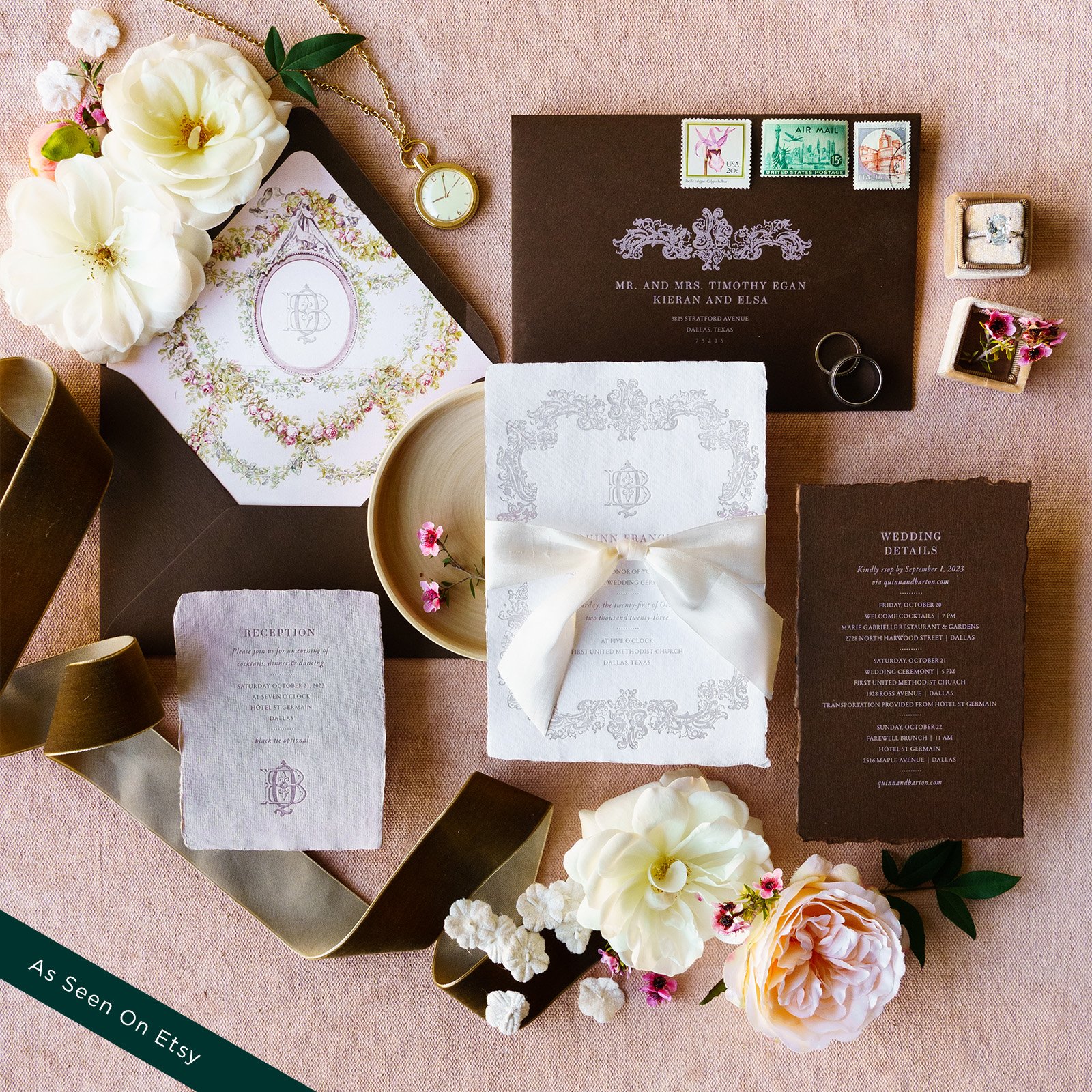
If you’ve received a wedding invitation in the mail or have been handed a new business card recently, there’s a pretty good chance that you noticed something quite eye-catching on that little piece of paper. You’ve probably noticed the way the letters or images stand out a bit more, or the colours give the illusion of being sunken in. No, your eyes aren’t playing tricks on you. There’s actually a term for those types of printing styles: they are called embossing and debossing. Both are uniquely different and have some pretty amazing effects, so if you are still reading and still interested, we would love to give you a little run-through on why these styles are so special and why we love them so much.
Embossing
To begin, let’s take a moment to break down what exactly these terms mean. There’s a pretty good chance that you have seen embossing done on wine labels, greeting cards, and even business cards without actually knowing what it was called. Embossing is a printing technique that involves taking a piece of paper, metal, or card stock and producing a raised effect. You may be asking yourself how exactly this is done.
The process of embossing involves creating a metal plate called a die that features the raised graphic that you would like to have embossed and a counter that is made out of plastic. The plate is then pressed into your paper or card stock, which is then pressed into the counter, resulting in an embossed graphic. These dies are reusable.
If you are considering different printing techniques for your stationery, our invitation ordering guide provides an overview of options including blind embossing, blind debossing, foil, and letterpress.
Sculpted embossing
Typical embossing plates raise to a single height, but sculpted dies have multiple levels to create varying amounts of relief. The result is extraordinary and will truly set apart your stationery. It’s a great application for crests, flowers, landscapes, or anything that could benefit from a little more detail.
Debossing
Debossing is quite similar to embossing; it is just performed oppositely. Rather than pressing the metal die underneath the print stock, this involves applying it on the top. If you have different types of text or other artwork, these can be pressed down into the material, leaving a beautiful indentation. A counter is not required in the case of debossing.
Marsupial Papers also describes blind debossing as a technique where the paper is pushed down and into the page without ink. You can learn more about how the different printing methods work in our frequently asked printing questions.
Blind debossing and embossing
Also known as blind printing, this is where there is no ink used during the printing process. This method of printing is popular for creating a unique and eye-catching element on invitations and business cards.
Blind embossing pushes the design up from the cardstock, while blind debossing pushes the design down into the cardstock. Both techniques create dimension without relying on printed ink. You can also explore Marsupial Papers’ printing methods and ink guide to understand how different printing techniques work.
Why embossing and debossing?
Embossing and debossing are great techniques, especially if there are certain parts of your work that you want to highlight. They are great for monograms, names, graphics, or any eye-catching information. Both of these techniques add an extra layer of texture and visual interest. Embossing and debossing can create a clean, crisp, and polished finish to the look you are trying to achieve.
These techniques can be especially effective when incorporated into wedding invitations and other stationery where texture and dimension can become part of the overall design.
Which will you choose?
Both embossing and debossing are great print techniques, no matter which one you choose. If you want your wedding invitations or business cards to really stand out, you can take them up a notch with these sophisticated printing techniques. The right option will depend on the design, paper, and overall look you want to achieve.
Frequently asked questions
What is the difference between embossing and debossing?
Embossing creates a raised design that stands out from the surface of the paper or cardstock. Debossing creates an indentation by pressing the design into the material.
What is blind embossing?
Blind embossing creates a raised design without using ink. The design is pressed into the cardstock so that it creates dimension through the shape and texture of the paper itself.
What is blind debossing?
Blind debossing creates an indentation in the cardstock without using ink. The design is pressed down into the paper to create a subtle but tactile effect.
Can embossing and debossing be used on wedding invitations?
Yes. Embossing and debossing can be used to add dimension and texture to wedding invitations. They can work particularly well for names, monograms, crests, floral details, and other design elements.
What is sculpted embossing?
Sculpted embossing uses dies with multiple levels to create varying amounts of relief rather than raising the entire design to a single height. This can add additional detail and dimension to designs such as crests, flowers, and landscapes.
What types of designs work well with embossing and debossing?
Monograms, names, graphics, crests, flowers, and other distinctive design elements can work well with embossing and debossing. The right technique will depend on the design and the effect you want to create.